Anxiety & Insomnia: 5 Medical Areas You Shouldn't Overlook

Anxiety and insomnia often go hand in hand. But which came first? And is anxiety the only cause of your insomnia?
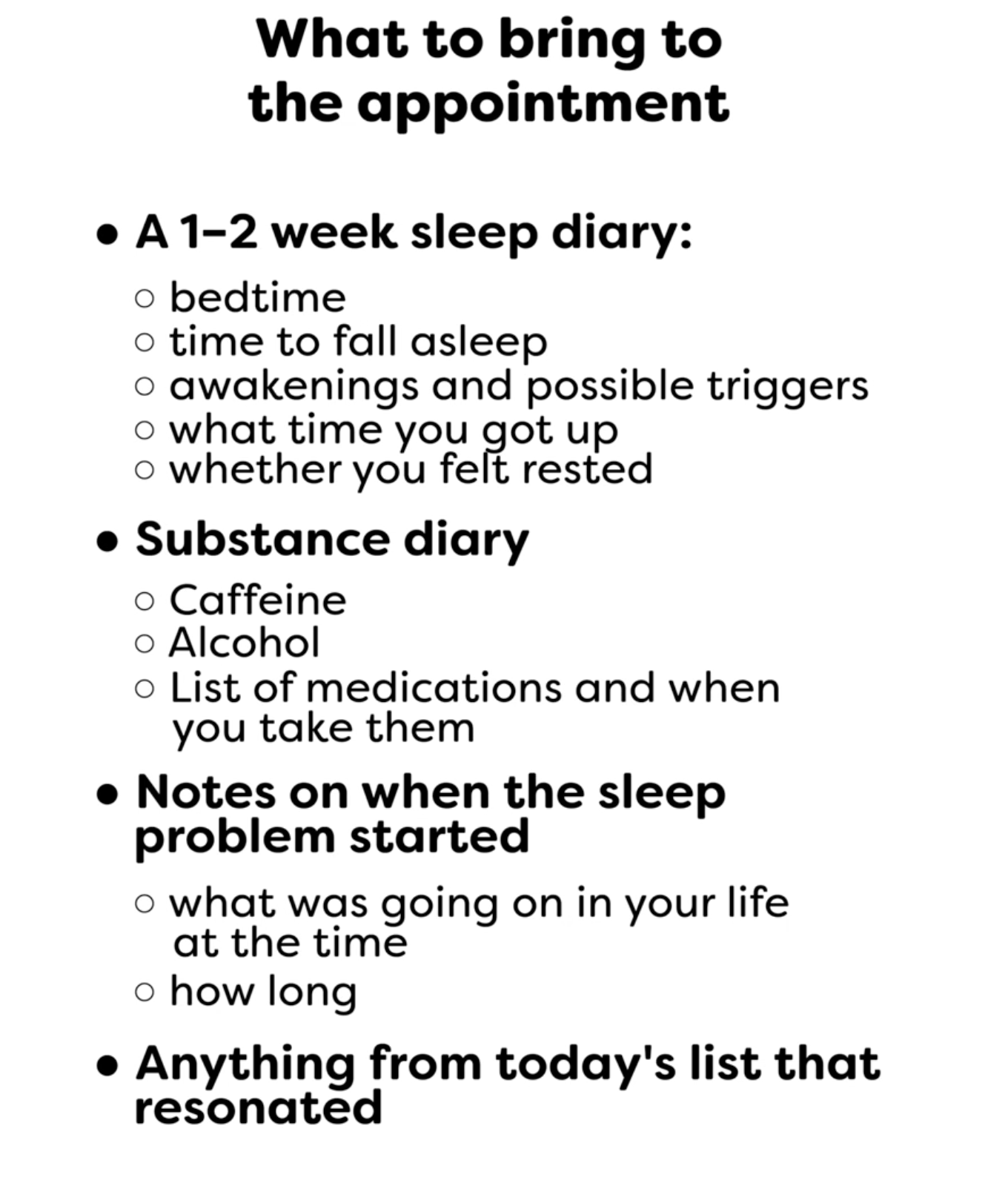
Insomnia is incredibly complex, and there are a number of medical issues that can contribute to it. These can be easy to overlook, and often they are very treatable. It is important for people with chronic insomnia to be screened for medical issues. Today I want to help you notice what might be relevant for you to discuss with your doctor, and by the end of this post I will also provide a checklist of what to bring to that appointment.
I have grouped these issues into plain-language categories to make them easier to scan. You do not need to worry about every single item, because this is not meant to replace a discussion with your doctor. It is meant to help you increase your awareness of whether there are contributing factors other than anxiety.
Five Groupings of Contributing Factors
1. Habits, Including Substances and Your Schedule
A number of commonly used substances can significantly interrupt sleep. These include caffeine, alcohol, and nicotine. Other prescription medications can sometimes affect sleep, and most illegal drugs have an impact on sleep.
It is very important to tell your doctor which substances you are using, which medications you are on, how much you take, and when you take them.
Stopping or cutting back on medications can also sometimes cause sleep problems, so that piece is relevant as well. Please make sure that any time you stop using one of these things, you discuss it with your doctor.
The other item under habits is circadian rhythm issues. This includes shift work: if your shifts need to change, that can be very challenging for sleep. It also includes what your own body’s circadian rhythm tends to be, because circadian rhythms differ from one person to another. Irregular schedules, jet lag, very late bedtimes, very early bedtimes — you get the idea.
2. Physical Discomforts That Get in the Way of Sleep
This grouping includes:
● Pain, including arthritis and fibromyalgia;
● Nighttime urination — and how often you get up.
● Restless leg syndrome: an urge to move your legs, or a feeling of discomfort in your legs when you are not moving them. This feeling is worse, or only exists, at night or when you are resting.
● Nighttime acid reflux, or GERD (gastroesophageal reflux disease): a feeling of heartburn, or coughing, when you lie down.
3. Things That Might Wake You During the Night
This category is phrased similarly to the first.
The biggest item here is sleep apnea.
The obvious signs of sleep apnea include loud snoring, your partner complaining about your snoring, and waking up gasping, as if you have not been taking a breath. Less obvious symptoms could be morning headaches, or feeling very tired during the day despite having slept a lot. Sleep apnea is very often missed, in women in particular, and it also increases with menopause.
There are methods for screening for sleep apnea that do not require a full-night sleep study. Those more portable tools are better at diagnosing moderate to severe apnea. There is also a self-screening checklist that I will point you to: the STOP-BANG screening tool, available on the Sleep Education website. Most of these screening tools are copyrighted, so it is challenging for me to reproduce the whole thing here, but you can go there and fill it out yourself. Again, I would say this is worth doing if you have been suffering from insomnia for a long time.
Another area under this category is shortness of breath, or heart palpitations that bother you at night. These are often harmless, and sometimes can be caused by various medications, but they should be included in a medical screening.
4. Hormones and Metabolism
I am going to start with the item that affects 50 percent of our population: menopause and perimenopause. It has been estimated that between 40 and 70 percent of women going through perimenopause have sleep disturbances. That is enormous (and I do not know why we are not talking about it more!). A large percentage of perimenopausal women also experience the onset of anxiety for the first time. These issues go together, and if this is affecting you, there might be a variety of ways your doctor can help you manage it.
As I say this, I will add that cognitive behavioral therapy for insomnia (CBT-I) has been shown to be effective no matter what the cause of the insomnia, so it can still help. But if a major hormonal imbalance is also affecting your insomnia, why not get some help for that as well?
Also in this category are thyroid disorders. Hyperthyroidism often goes with both anxiety and a lack of sleep. Alternatively, the medications used to treat hypothyroidism can sometimes interrupt your sleep if the dosage is too high for what you need. It is worth checking your thyroid levels — your TSH (thyroid-stimulating hormone) levels — with your doctor.
Diabetes and blood sugar levels can also affect insomnia.
5. Mood and Mental Health Issues
This brings us back to the beginning, since we started with the topic of anxiety and insomnia, which go hand in hand.
Before I go into more detail, I want to say — and I know you have heard me mention this — that CBT-I is the first line of treatment, no matter what. Part of CBT-I is relaxation techniques, and there are many sleep meditations and relaxation materials out there that can be very helpful no matter what the underlying cause. In case you are interested, I have some sleep meditations on an app called Aura Health. You can try it free, check out the sleep meditations, and see whether they are helpful for you before you decide to commit [30-day free trial here].
The issues under this category that should be discussed with your doctor include:
A) Anxiety. When did it start? How bad is it? Are there panic symptoms? Provide some history and context.
B) Low mood, loss of interest in things that used to interest you, and any other signs of depression. Depression is clearly correlated with insomnia.
C) If you have had a lifetime issue with focus, motivation, and restlessness, it is worth discussing this with your medical doctor because this could be a sign of ADHD (attention deficit hyperactivity disorder). ADHD does disrupt sleep and wake cycles.
I do want to say here that sometimes, for people who have ADHD, going on the medication — which is a stimulant — actually improves their sleep. That sounds as though it makes no sense, but it has been shown that the medication often helps people with ADHD regulate their sleep cycles and sleep better. Not always — I need to caveat that — but sometimes it does help.
D) Another thing to discuss with your doctor is if you have had any period in your life when you needed very little sleep, had excessive energy, or felt a particularly high mood. This can often go with racing thoughts and/or high-risk behaviors. If you have had periods of time like this: when were they? How long did they last? How often did they occur? If this leads to a diagnosis of bipolar disorder, bipolar disorder is treated very differently than insomnia.
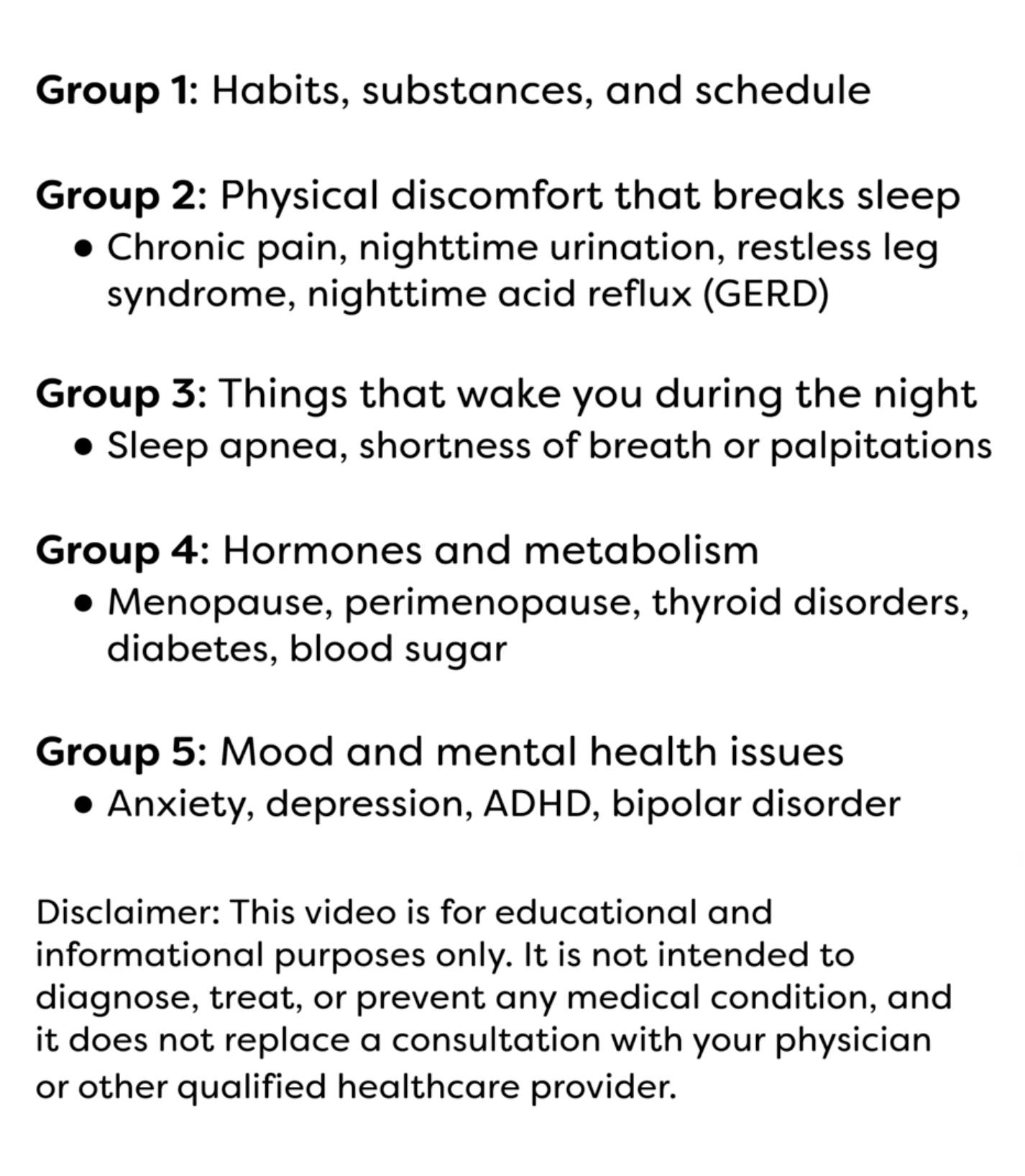
That was a lot to cover, so here is everything on one screen. You can screenshot it and then print it if you like. It gives a good summary of the things that should be thought about.
Disclaimer: This blog is for educational and informational purposes only. It is not intended to diagnose, treat, or prevent any medical condition, and it does not replace a consultation with your physician or other qualified healthcare provider.
Putting It All Together
I know this was a lot, but as I said, insomnia is complicated, and it is important to try to treat it correctly. Most of what we covered today is common and treatable.
Anxiety is often still part of the picture. It is rarely either/or — it usually goes hand in hand.
Just so you know, in the United States and in Europe, the medical guidelines are that a primary care physician is the first line of contact for screening for insomnia. Generally, more specific tests and further testing are done if a screening tool indicates they are needed, or if the patient is referred for CBT-I and does not improve. Secondary tests then often follow.
I am a full believer that we are our own best advocates, and that having some knowledge to assist us in conversations with medical professionals can be truly helpful. me know what you think, and whether you agree. Please post any comments or questions under the
YouTube video on this topic. I do read them, and I use them to decide what my future content should focus on!
I truly hope this was helpful and I will see you next week!
Blog Author: Barbara Heffernan, LCSW, MBA. Barbara is a licensed psychotherapist and specialist in anxiety, trauma, and healthy boundaries. She had a private practice in Connecticut for twenty years before starting her popular YouTube channel designed to help people around the world live a more joyful life. Barbara has a BA from Yale University, an MBA from Columbia University and an MSW from SCSU. More info on Barbara can be found on her bio page.
Share this with someone who can benefit from this blog!