Pathological Lying and Elizabeth Holmes: What We Can Learn

Have you ever been lied to by someone who seems so convinced of what they are saying, yet you know it is not accurate? It is so confusing!
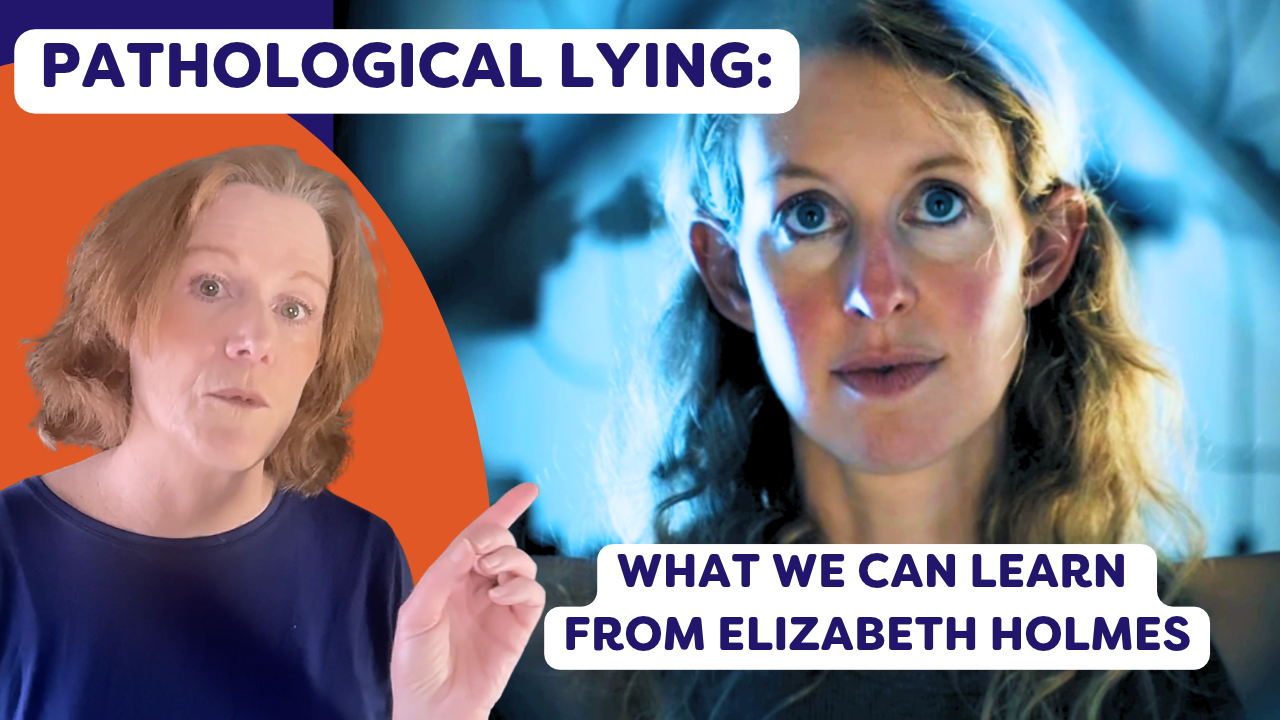
We can learn a great deal about pathological lying from the movie "You Can See Everything."
I will focus on one scene in particular, which contains many layers of lies. This is a terrific reflection of what happens when we are with the pathological liar. The layers of lies are so complex we get very confused, and often miss the connections to other lies until much later, when we have had time to reflect. (Spoiler alert: if you haven't seen the movie and plan to, you might want to come back to this article!).
I believe some of the confusion we feel while watching this movie was intentionally created by the directors. Lance Oppenheim and Nathan Fielder have said they were very confused and unsure what to believe while they were filming the movie, and they wanted to put us in their shoes. To recreate that confusion for viewers, they showed particular scenes in a particular order.
The Scene Which Demonstrates the Depth of the Lies
The scene in the movie that best demonstrates the complexity of the lies being told is the one in which Elizabeth Holmes is 3D photographed so that her partner, Billy Evans, can create a video image of her. They say they are doing this so Billy can record things for her children, because she is going to jail.
Partway through the scene, Elizabeth becomes very upset and breaks down. She says the experience is triggering memories of running Theranos, when she was forced into the limelight and forced to be photographed in a certain way. She regrets having been the face of Theranos, and she regrets having been put in that position.
As an audience member, you naturally feel empathy when she breaks down this way. She definitely seems to be in pain over that memory.
Prior to this scene, the directors chose to show specific incidents that portray Billy as controlling. This leads you to believe that maybe he is somehow forcing her to do this, leading you to accept Elizabeth’s distress even more readily.
However, if you review the history of Theranos, you would see that Holmes hired a very expensive advertising agency early in the Theranos story. That agency decided that she should be the face of Theranos. She ran Theranos, she agreed to it, and she certainly seemed to do so willingly.
If you know that background, yet see how genuine her upset seems to be, you are more than a little confused!
She Invited the Filmmakers Into Her Home
Another layer of deception, one I did not recognize until the movie was over, is that she willingly invited Nathan Fielder and Lance Oppenheim into her home to film her and her partner 30 days before she was going to jail. Those were her very last days with her children and her beloved partner, and she wanted to have people come in and film her.
That detail adds to the confusion, but it also brings clarity: she is a master of showing you the side of herself that she wants you to see. In this movie, she shows us a side that she hopes will tug at our heartstrings and change our view of her. She wants your empathy, and she knows how to get it.
More than any other, this scene convinces me that she is lying pathologically and skillfully. Actually, masterfully.
Why Create a Video Image for Her Children?
I did not recognize one more layer of deception until I sat down to record this video. She and Billy say they are creating this 3D image of her, so that they can make videos for her children. But she is not dying. She is going to jail, and her children can visit her.
Why exactly would they need a video image of her to show their children?
Other movies have shown people with a terminal illness creating videos for or writing letters to their children so the children have a way to connect to them after they are gone. These scenes always create a hugely empathetic response in the audience (they certainly do for me!) I am assuming that Elizabeth and Billy know this.
Clearly, they are creating that video image for a very different reason.
What We Can Learn From This
Let us turn to what we can learn from this movie, because I like to give my viewers tools that help them navigate their own lives. For the most part, I do not spend time on the pop culture issues of the day, but this movie highlights many things that I think are relevant to all of us.
Very Smart People Can Be Deceived
Part of what we can learn here is that very smart people can be deceived by somebody who is also very smart. This can relieve some of the self-blame we feel when we have been on the receiving end of a lie and have believed something that is not true. We end up feeling dumb and asking ourselves, “How could I have believed that?”
Do They Believe Their Own Lies?
When we are in a relationship with a pathological liar, we often get stuck on the question: Do they believe their own lies? Particularly if the person is someone in our family, maybe even someone we care about, we almost want to excuse them and remain in our compassion for them. But also, we are trying to find our ground. Trying to understand if we are seeing things incorrectly.
There is no stable reality, and we become deeply confused.
The answer to this question is this: there is no way for us to know whether a pathological liar believes their own lies, and it does not matter.
A pathological liar’s mind works very differently from the mind of someone who cannot, and does not, lie pathologically.
A common thinking error is to project our own feelings and thoughts onto others.
When we are dealing with someone who lies pathologically, we think, “They must believe what they are saying, because I could not lie in that manner. I could not lie that convincingly and consistently."
Even when caught in a lie, the pathological liar sticks with it. We know we could never do that, so we think they
must believe it.
I think one big lesson from this movie is that this thinking is faulty.
Empathy, Trust, and Boundaries
I believe everybody deserves our empathy, but not everybody deserves our trust. Ultimately, it comes down to knowing your own reality and standing your ground. There is no need to argue with somebody who is pathologically lying. It will not help, and it will leave you exhausted.
Know your truth. Learn to set and enforce boundaries.
Healthy boundaries are about us, not about the other person changing their behavior. You cannot set a boundary that says, “You have to stop pathologically lying,” because that probably will not happen. You can, however, change your response to the lying.
This is a complicated topic. I have a number of videos on boundaries [click here for playlist], or you can search my blog by clicking here.
I also have a six week program on developing healthy boundaries which people have found transformative [click here for info on the boundaries program].
I hope this was helpful. Please post your comments or questions on the YouTube page for
this video by clicking here.
Blog Author: Barbara Heffernan, LCSW, MBA. Barbara is a licensed psychotherapist and specialist in anxiety, trauma, and healthy boundaries. She had a private practice in Connecticut for twenty years before starting her popular YouTube channel designed to help people around the world live a more joyful life. Barbara has a BA from Yale University, an MBA from Columbia University and an MSW from SCSU. More info on Barbara can be found on her bio page.
Share this with someone who can benefit from this blog!