Which of These 6 Beliefs Is Sabotaging Your Emotional Regulation?

If you view your emotions as a threat — as something to be avoided or suppressed — you are activating your ancient brain, your amygdala, and setting off your internal alarm bells. This makes everything worse.
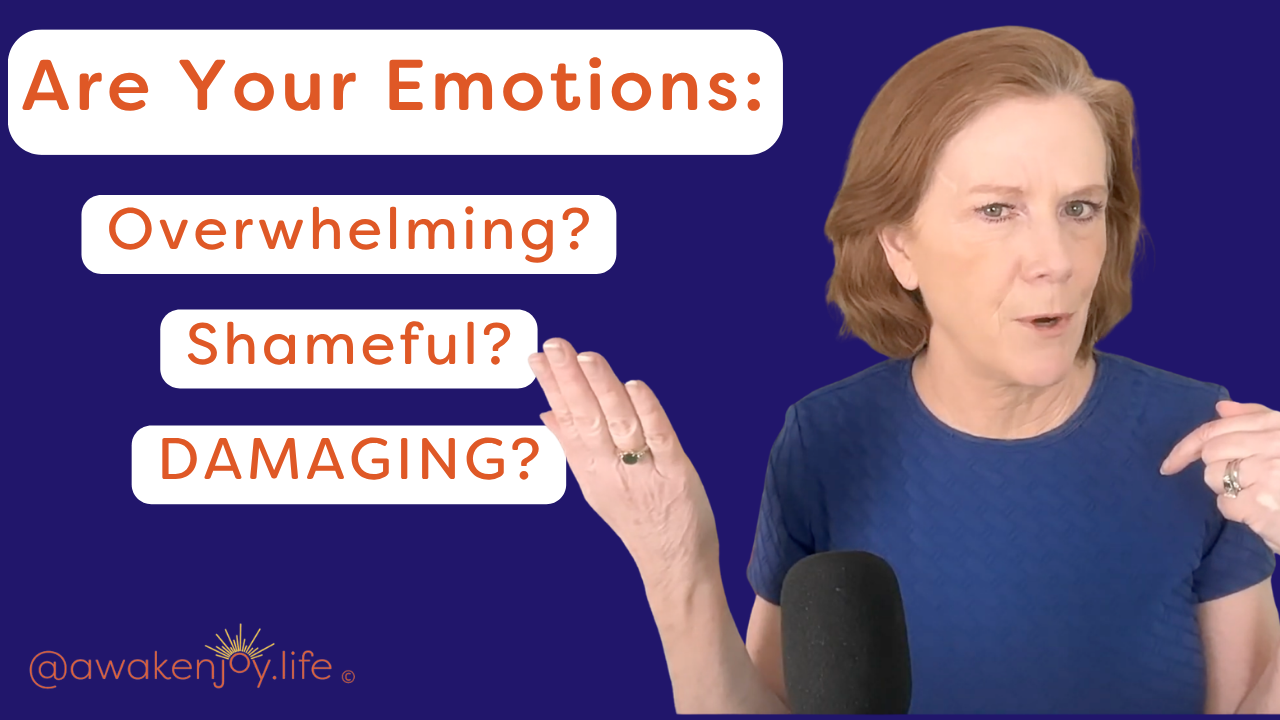
Research has proven that how you view your own emotions can exacerbate emotional dysregulation or create emotional resilience.
Six categories of beliefs have been identified that exacerbate emotional dysregulation. Which one is yours?
The Six Categories of Beliefs About Emotions
Belief #1: My Emotions Are Overwhelming and Uncontrollable
This belief carries the sense that emotions simply happen to you and that you can do almost nothing about them. There is a feeling that if you allow yourself to go there, the emotion will be bigger than you — that you may never get out of it, or that you will be unable to function. This belief is one of the biggest drivers of emotional avoidance, and avoidance makes things worse, not better. I will provide tips at the end of this post on how to address this, as well as where to find more information on why avoidance is such a problem. The core issue is that avoidance keeps emotional distress going rather than allowing it to resolve.
Belief #2: My Emotions Are Shameful and Irrational
Rather than simply feeling anxious, angry, or sad, you layer on top of those feelings the judgment that there is something wrong with you for feeling that way. You feel bad about feeling anxious, sad, or angry. Your inner critic stays right there, criticizing the emotion itself. Feeling shame about your emotions prolongs them. Shame prevents people from seeking help or even sharing what they are feeling.
As I discuss in a number of my other videos and posts, there is nothing wrong with our emotions. They do not feel good and we do not like them — but we are human and we have all sorts of emotions. The actions we take as a result of our emotions can be judged, but the core emotion itself is information. It is not a question of being good or bad.
Belief #3: My Emotions Are Invalid or Meaningless
With this belief, you dismiss your own feelings before anyone else even has a chance to. The inner voice says: "This is stupid — I should not feel this." Or: "I should not be complaining. Other people have much bigger problems."
This can feel like perspective-taking or being rational. What it actually is, however, is invalidating your own emotions instead of investigating: What is valid about this emotion? What is it trying to tell me? Why am I feeling this?
Approaching your emotions with curiosity — rather than with an automatic sense that something is wrong with you for feeling them — is a fundamentally different response.
By the way - and I am anticipating your question here - yes, you can have more than one of these beliefs. If several resonate, try to identify your top two. We will discuss the negative core beliefs underlying them shortly.
These categories come from scientific research [Manser, R., et al. (2012), Beliefs about Emotions as a Metacognitive Construct. Clinical Psychology & Psychotherapy, 19: 235-246.]. They are the categories of beliefs about emotions that have been shown to make emotional distress worse and more intense, and to prolong the amount of time we experience the negative emotion. Without these beliefs, emotions can resolve more quickly, feel less intense, and not last as long.
Belief #4: My Emotions Are Useless
This belief frames emotions as interference that gets in the way of 'clear thinking.'
However, our clearest thinking actually
incorporates an understanding of our emotions — an understanding of how we feel about different situations, events, and people. Our emotions are a rich source of information when we learn to work with them.
When you push them away, you are pushing away useful information that helps you understand yourself, understand others, and navigate the world. Dismissing emotions disconnects you from one of the most important signals about what matters to you, what your boundaries are, and what needs attention in your life.
This is common among people who have had to function at a high level for a long time — probably since they were very young. It may feel as though suppressing emotions helps you function, and perhaps it does in some respects. Over time, however, it can lead to significant anxiety, poor sleep, burnout, and an overall diminishment of happiness. I also have a video on how suppressing emotions is itself a type of emotional dysregulation, even when it does not feel that way.
Belief #5: My Emotions Are Damaging
This belief holds that emotions are dangerous — either to you or to others. It connects to the sense of being overwhelmed, because if something feels overwhelming, it is, in essence, perceived as dangerous.
The threat may feel even more acute: If I let myself feel this anger and express it, I will do major damage. Or: My anxiety is hurting me — it is creating health problems. Reacting to the anxiety with panic then makes things considerably worse.
This belief treats emotion as a threat. You are being attacked by something internal, which generates the urge to run away from the emotion, go into freeze mode to avoid feeling it, or fight against it — and to do all of these things with urgency. We rightly respond to real, damaging threats with urgency. Applying that same urgency to our own emotions, however, is what escalates and prolongs distress rather than resolving it.
Belief #6: My Emotions Are Contagious
You monitor carefully how much of your emotional experience you let others see — because you believe that expressing your emotions will burden them, destabilize them, or make things worse. "They have enough to deal with." "I'll bring everyone down." "My feelings are too much for others."
This is perhaps the least-discussed of the six beliefs, and one of the most important — because it doesn't just drive self-regulation. It drives
self-erasure. It leads to chronic masking, suppression in exactly the contexts where authentic expression would most build connection, and a persistent sense of being a burden.
Where These Beliefs Come From
These beliefs were almost certainly formed very early in life. Consider someone who grew up watching a parent explode in anger and witnessed the damage that caused. That person may have decided never to allow themselves to feel anger. What was damaging, however, was the adult’s behavior — not the feeling itself. You can feel anger without it leading to destructive behavior.
For people who feel that their emotions are shameful, that belief was likely taught in early childhood. Your caregivers may have said or indicated:
"How could you feel that way?"
"Only bad people feel that."
We are not supposed to feel jealousy, envy, or anger. None of that, however, taught you how to work with those emotions. All of it contributed to — if not directly caused — the development of a negative core belief.
If you have not yet downloaded my free PDF — Transform Your Negative Core Beliefs — I encourage you to do so. It can be very helpful in identifying the negative core belief underlying your beliefs about emotions and your ability to handle them, and it provides methods for beginning to overturn that deep core belief.
Manser’s research shows that across all six beliefs, the more strongly a person holds them, the greater their emotional dysregulation and distress. Separate research also shows that the belief most strongly connected to emotional dysregulation is the feeling of "I cannot cope with this emotion" — which ties most directly to the beliefs that emotions are damaging or overwhelming, but can connect to any of the others as well. I discuss this in more depth in last week’s blog, which I will link here, and that blog also provides clear tools for working with it.
What to Do About It
1. Recognize That Beliefs Change
You almost certainly have examples in your own life of beliefs that shifted as more evidence accumulated over time. Beliefs change — and the beliefs you hold about your emotions can change too.
2. Work Against Confirmation Bias
When we hold a belief, we look primarily for evidence that confirms it, not evidence that contradicts it. In challenging these beliefs, begin to reverse that. Look for evidence that the belief is not true.
3. Drill Down to the Negative Core Belief
Take your top one or two beliefs and examine them using the PDF on negative core beliefs. What do these beliefs say about you? They might point to core beliefs such as: I am damaged, I am a bad person, I am defective, I am incapable, or I am in danger. These are among the core negative beliefs developed for use in EMDR therapy, which is a very effective treatment method. Drill into your belief about emotions to find those underlying core beliefs, and then begin to work on them — doing so will filter through everything else.
4. Create Distance from Your Thoughts About Your Emotions
The steps I discussed in last week’s blog are about creating distance from your thoughts: I am thinking that I cannot cope with this feeling, or I am thinking that I am a bad person and that it is shameful to have this emotion. This creates a little distance. You have your emotion, you have your thought about that emotion, and then you have the thought about the thought — and you begin to pull it all apart.
The last piece — and this is not easy — is learning to sit with your emotions and developing your emotional intelligence: your ability to read what an emotion is telling you. This work takes time and effort, but it is well worth it.
If you found value in this, please share with someone who might benefit. Thank you
Blog Author: Barbara Heffernan, LCSW, MBA. Barbara is a licensed psychotherapist and specialist in anxiety, trauma, and healthy boundaries. She had a private practice in Connecticut for twenty years before starting her popular YouTube channel designed to help people around the world live a more joyful life. Barbara has a BA from Yale University, an MBA from Columbia University and an MSW from SCSU. More info on Barbara can be found on her bio page.
Share this with someone who can benefit from this blog!