
Physical Symptoms of Anxiety
Barbara Heffernan • June 12, 2025

Can these symptoms really be anxiety?!
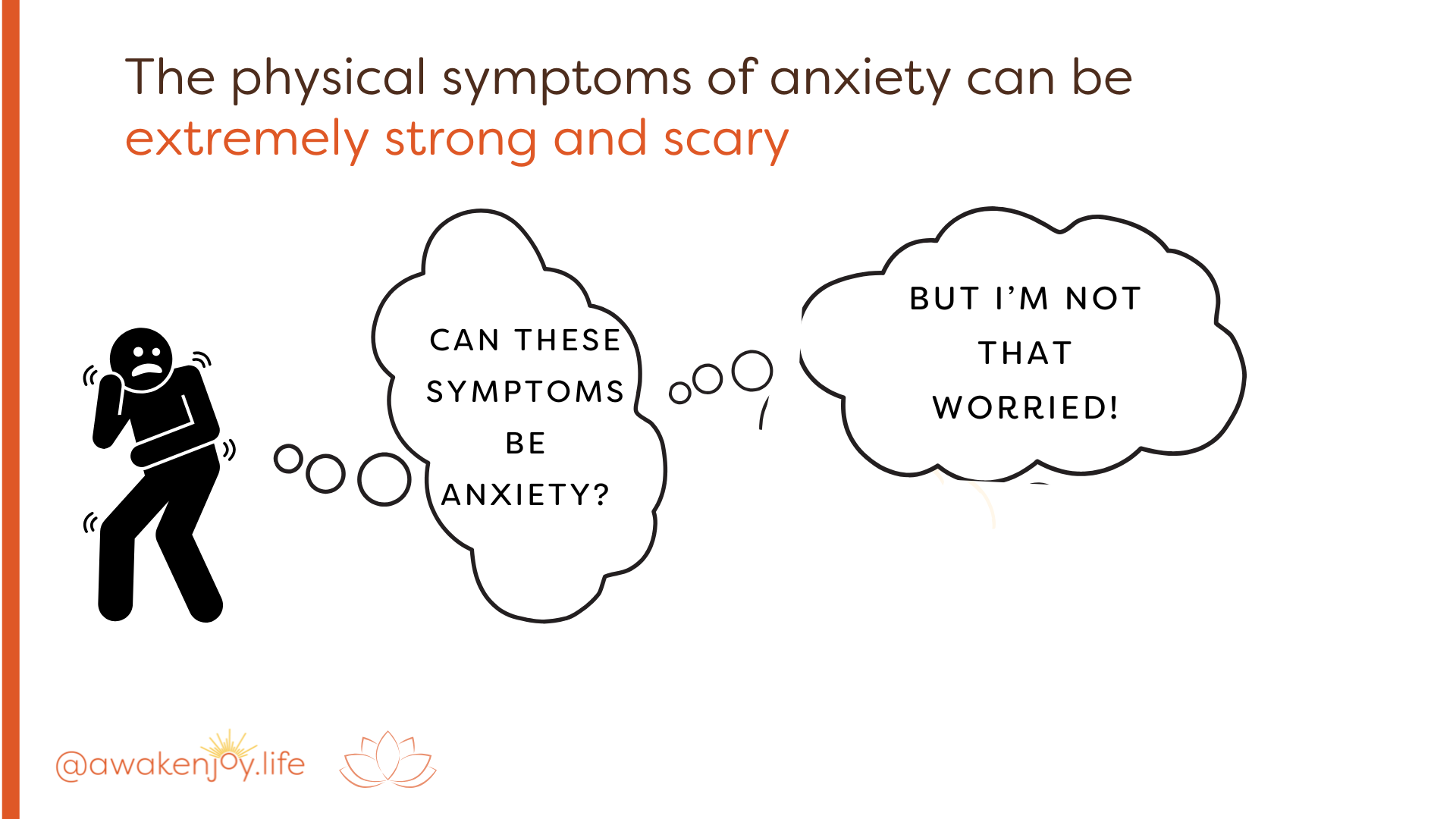
Physical Symptoms of Anxiety: Understanding Your Body's Response
If you're experiencing physical symptoms from anxiety, these can be very strong and very scary. You're probably wondering: could these really be anxiety?
Maybe you weren't particularly worried and you're still having these very strong physical reactions. Or perhaps you weren't worrying at all and the physical reactions just hit you out of the blue.
Maybe you weren't particularly worried and you're still having these very strong physical reactions. Or perhaps you weren't worrying at all and the physical reactions just hit you out of the blue.
This can be very confusing, and many people wonder: is this anxiety or is it something else? In this article, I'm going to cover physical symptoms of anxiety in detail, explain why your body responds this way (understanding this can really help you calm yourself about the symptoms you're having), and discuss what you can do about it.
First Things First: See a Doctor
If you're having serious symptoms, you always want to see a doctor and get everything checked out. There are a number of conditions that can look similar to anxiety symptoms. However, if you've been given a clean bill of health, this blog will help you understand why these symptoms arise from anxiety and confirm that they are from anxiety!
Now, I want to reiterate: **anxiety is not all in your head.** Even if a doctor says there's "nothing wrong with you and these symptoms are anxiety," know that anxiety does cause real physical symptoms.
They are uncomfortable, they can be very scary, and they are real. You are really physically feeling something.
How Anxiety Affects Your Entire Body
Anxiety can impact almost every one of our major physiological systems. Anxiety can impact our:
- Cardiovascular system
- Respiratory system
- Gastrointestinal system
- Muscular skeletal system
- Other parts of our nervous system
Cardiovascular Symptoms include:
- Increased heart rate
- Pounding heart or racing heart
- Palpitations (sometimes fluttering or a skipped beat)
- Chest pain
- Lightheadedness or dizziness
- Feeling faint or unsteady
As I mentioned earlier, if you're having these symptoms, have them checked out by a doctor. However, if they're tied to anxiety, you can then begin to treat them as anxiety.
Gastrointestinal Symptoms include:
- Difficulty swallowing
- Change in appetite (some people when they get very anxious can't eat at all, while other people just want to do nothing but eat - it really can impact you either way)
- Upset stomach
- Nausea
- Diarrhea
- Other digestive problems
- Constipation
Respiratory Symptoms include:
- Shortness of breath
- Hyperventilation
Muscular Skeletal Symptoms include:
- Muscle tension (very common)
- Tremors or shaking
- Tics (for example, a little pulse in your eye, which is pretty common, or in your hand - it can happen in different places)
- Headaches (very common with anxiety)
- Muscle aches, pains, and cramps
Other Symptoms include:
- Numbness or tingling in your extremities
- Sweating
- Dry mouth
- Fatigue
- Insomnia
You can really see how the physical symptoms of anxiety can impact your whole body.
Understanding the Adrenaline and Cortisol Cycle
Let me explain briefly about the adrenaline and cortisol cycle, because all of these symptoms actually have a common cause when they're caused by anxiety.
When you have a stressor, your adrenaline begins to spike. This isn't necessarily a bad thing - if you have a saber tooth tiger you need to run away from, you want your adrenaline to kick in. Sometimes a small amount of adrenaline can be motivating to study for an exam, prepare for a big work meeting, or motivate yourself to get off the couch and do what you need to do. A certain amount of adrenaline helps us get up in the morning, so a little bit can be helpful. Too much can be problematic.
When adrenaline kicks in, shortly thereafter a hormone called cortisol kicks in and begins to rise. As cortisol peaks, the adrenaline starts to drop. So the cycle goes: stressor → adrenaline goes up → cortisol goes up → then they both drop, hopefully followed by a period with no stressors. When another stressor hits, it happens again. Our bodies are built to deal with this.
If your stressors are happening and your adrenaline is spiking once in a while, often you won't have major physical symptoms. However, if you have continual stressors, how you manage your stressors will impact this cycle as well. And this is not to minimize stressors. Some are very serious, some can be minor. The more you can make sure you aren't overreacting to the minor stressors, the more energy and wherewithall you will have to deal with the serious ones. And many serious ones require planning, which is more effective when you are not in the middle of an adrenaline-cortisol spike.
If we respond to minor stressors with a lot of anxiety and worry (which is really what an anxiety disorder is), we're continually responding to every stressor, whether it's big or not, with adrenaline. Then cortisol kicks in. With continual stressors and the way we respond, the cortisol never gets a chance to come down. Cortisol can remain elevated chronically on an ongoing basis, and that has actually been implicated in a number of major diseases.
I'm not saying this to frighten you, but to give you motivation that you can have agency over your anxiety. Anxiety is very treatable. When I worked with people as a therapist for over 20 years, working with anxiety was very satisfying for me as a therapist, and it was satisfying for the client because people could make major progress. So I want to give you that hope.
The Health Impact of Chronic Stress:
Continually elevated cortisol levels are tied to:
- Diabetes
- Osteoporosis
- Cardiovascular disease
- Weakened immune system
- High blood pressure
- Impact on sexual desire and libido
- Reproductive functions
Why This Happens: Your Body's Design
Your body is designed to deal with dangerous situations. Our brains evolved this way. We have an amygdala and a fight, flight, and freeze response. If we're actually being chased by a dinosaur or a scary dog, we're designed so that our fear response will kick in:
- Our adrenaline will spike
- Our muscles will tense
- Our heart rate goes up
- We have digestive issues (you don't need to be digesting your food if you're being chased by a wild animal - you need to not digest that food and just run)
- We get a very single-minded focus
I want to come back to that single-minded focus because I think it's quite important and we don't always talk about that being an impact of this fear response.
We need this fear response - we want it in some situations. The problem is when we think about that dinosaur, when we think about that scary thing happening, our body has the same response.
Simply thinking about being attacked by whatever the danger is produces the same response: our adrenaline spikes, our muscles tense, our heart rate goes up, we have digestive issues, we get a single-minded focus.
That single-minded focus is problematic because most of the problems we face today really need our whole brain online. We need to be able to think creatively, pull in solutions, and be aware of what we can do right now and what we want to do to be prepared to face problems in the future.
You want the whole brain working, not just that overactive amygdala, and you want to be thinking creatively. That's not what happens when you have to run away from a wild animal.
How All Physical Symptoms Connect
All the physical symptoms of anxiety have a common thread - they can all be tied to a fight, flight, or freeze response:
- Your inability to swallow or eat: if you have to fight, flee, or freeze, you're not eating a meal
- Digestive issues: if you have to fight, flee, or freeze, you're not digesting your food - in fact, the opposite
- Constipation can be tied to the fight or flight response
- Diarrhea is more tied to the freeze response
The freeze response kicks in when we can't fight and we can't flee. You'll see this with animals - if an animal is being attacked by a larger animal and can't run away, it will go into a freeze state. A number of symptoms that you might not think were anxiety-related are actually freeze state related, such as dizziness, lightheadedness, and passing out.
The opposite - heart rate going way up and heart palpitations - is part of the fight or flight response.
What You Can Do About This
**Identify Your Symptoms as Anxiety**
If you've had everything checked out and you are having these symptoms, or if you know that these are tied to anxiety, you can begin to treat them that way. As you begin to try to relax your physiological being, you will probably see an improvement in your symptoms.
Treating the symptoms as anxiety allows you to take care of them, and then they won't be making you more anxious. You won't be worrying about the symptoms, which is what tends to happen and why they tend to worsen your anxiety cycle.
**Practice Healthy Relaxation Techniques**
Practice techniques that help you relax in a healthy way. This does not include things like alcohol or benzodiazepines - those have a biphasic impact. They might give you a feeling of relaxation, but when their half-life is through and they're processing through your body, they leave you more anxious than you were before. They have two phases and aren't going to help you get over anxiety in the long run.
Instead, focus on techniques like:
- Yoga
- Diaphragmatic breathing
- Progressive muscle relaxation
- Grounding techniques
- Mindfulness practices
All of these can help you be here now and pull your mind back away from all the projected problems. Even if your anxiety is hitting you physically, it's going into a cycle where you begin to worry about the physical symptoms.
Understanding Your Anxiety Cycle
Whether your anxiety starts with thoughts or physical feelings, it creates a cycle. If you start with physical feelings, you might say, "Well, I didn't have a story. There wasn't something I was worried about. I just got hit with these physiological feelings." But then because you were hit by them, you started to worry.
That's where your cycle starts. Whether it starts with thoughts or physical feelings doesn't matter in terms of how you approach healing - if it starts with physical feelings, you need to help it not lead into worry about those physical symptoms.
I think that's one reason to understand that these symptoms could actually be anxiety. If they are, you don't have to worry about them - you have to calm yourself.
The anxiety cycle can start in two fairly typical ways:
1. **External Problem Starting Point**: There's some kind of external problem and our minds jump into trying to figure that problem out. We jump into the future and might catastrophize.
2. **Sensory Event Starting Point**: There's some kind of sensory event (sometimes below your awareness - it could be a smell or something you weren't even aware of) that causes a physiological reaction. That anxiety makes you think, "I'm feeling anxious, there must be something I should worry about." Then you jump into the cycle of wondering what you have to worry about, or your mind goes through all your problems.
Wherever it starts, it goes into this entire cycle: anxious feelings lead to anxious thoughts or increase the ones you're having already. They also lead to anxious behaviors (which can be either compulsive or avoidant). Both anxious thoughts and anxious behaviors then increase those physiological and emotional feelings of anxiety.
It's really key to understand your cycle - your anxiety cycle - where it starts, where it goes, how it works, and how you can learn to interrupt it.
Looking Ahead
This video is part of a three-part series. Next week, I'll be releasing a video about anxiety when there is no story - for people who feel anxious but can't identify what they're worried about. We'll talk about how our past experiences get linked deep in the brain, creating connections between certain sensory information and emotional responses. This link can be either positive or negative and can often be the trigger for anxious physical symptoms, sometimes out of your conscious awareness.
**Remember: anxiety is very treatable.** You can definitely make improvement and lower your anxiety. If you're getting value from this information, please share it with others who might benefit.
Let me know what you thought of this article and whether it was helpful. Understanding that your physical symptoms might be anxiety-related is the first step toward managing them effectively and breaking the cycle that keeps you stuck.
Blog Author: Barbara Heffernan, LCSW, MBA. Barbara is a licensed psychotherapist and specialist in anxiety, trauma, and healthy boundaries. She had a private practice in Connecticut for twenty years before starting her popular YouTube channel designed to help people around the world live a more joyful life. Barbara has a BA from Yale University, an MBA from Columbia University and an MSW from SCSU. More info on Barbara can be found on her bio page.
Share this with someone who can benefit from this blog!
Do you worry about how much sleep you get? We have been told for years that we need eight hours of sleep every night — that if we get it, great, and if we do not, it is a major problem. Yet, worrying about this is making the problem worse! Insomnia is painful, and this post includes practical tips to help.
Struggling with anxiety and avoidance? Learn why avoiding uncomfortable situations reinforces fear, causes anxiety to spread, and how exposure therapy, fear extinction, and EMDR can help break the cycle.

Anticipatory anxiety shuts down our creative problem-solving, just when we need it the most. Here's the process to get it back. 4 steps to help anticipatory anxiety.
"Just stop thinking about it" doesn't work. However, the Attention Training Technique from Metacognitive Therapy has been shown to help lower anxiety and rumination.
Does your brain drive you nuts going over and over the same thing—the mistake you made, the difficult conversation you had....anything you are worried about? This is rumination and it is driven by the Default Mode Network of the brain. Understanding this can help you change.
Social anxiety often has a trauma root — understanding the connection can help you heal.
Overloaded and Overwhelmed? You are in the right place. Here's help.
overwhelm has a cruel side effect. It shuts us down. Right when we feel like we need to get more done, not less, overwhelm makes our mind go blank or puts us into a freeze stateUnderstanding how overwhelm manifests for you can really help you calm it down.
Terrified to make eye contact? Constantly worried about what others think of you? You're not alone. These experiences are fairly common and often point to social anxiety disorder, which IS treatable. This blog explains this connection, provides treatment options and 3 self-help tools.
Interoceptive exposure can be transformative for people with somatic anxiety, specifically panic attacks, PTSD, OCD and health anxiety. Interoceptive exposure is a technique used within CBT, Cognitive Behavioral Therapy.
