
Is Anxiety Hereditary?
Barbara Heffernan • April 29, 2025

Do we, or can we, inherit anxiety?
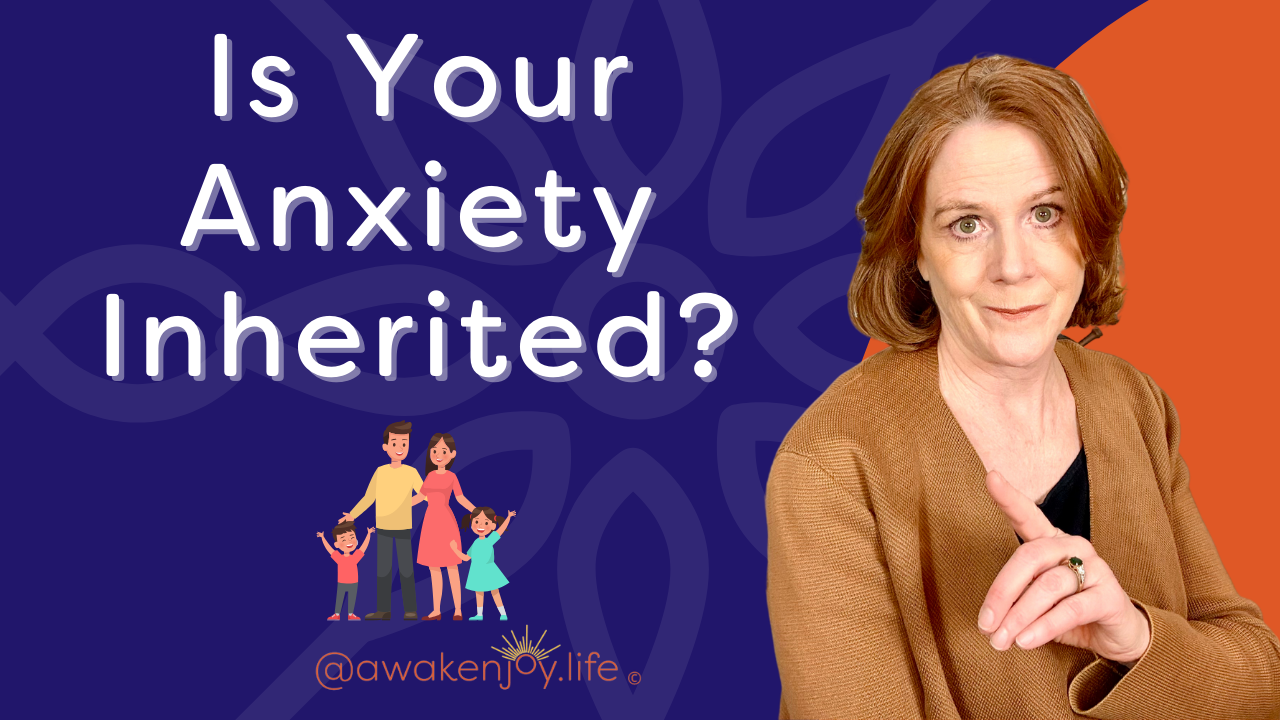
Sometimes is seems that anxiety runs in families, but not everybody has it.
Other times, someone might have anxiety when no one else in their family does.
In this blog, I'll discuss the current state of research regarding whether anxiety is genetic and inherited. I will also address whether this knowledge matters, and if it does, why it matters.
Other times, someone might have anxiety when no one else in their family does.
In this blog, I'll discuss the current state of research regarding whether anxiety is genetic and inherited. I will also address whether this knowledge matters, and if it does, why it matters.
The role genetics plays varies by specific anxiety disorder. Toward the end of this article, I will provide a summary of current research findings for generalized anxiety disorder, panic disorder, specific phobias, agoraphobia, and social anxiety disorder (the five anxiety disorders that primarily apply to adults in the DSM-5-TR). I will also include obsessive-compulsive disorder because, while it's no longer classified as an anxiety disorder, many readers ask about OCD, and there is significant overlap.
Before examining specific disorders, it's important to understand the research methodology and findings in general terms. I'll break down concepts like "familial aggregation" and "concordance rates in twin studies" to provide an accessible and understandable overview.
The Science Behind Anxiety and Genetics
Anxiety is a common human experience. However, it becomes a disorder when it is excessive, interferes with daily life, or impacts overall functioning or happiness.
Anxiety disorders are prevalent—research shows that up to a third of the population will experience an anxiety disorder at some point in their life.
Family history and genetics are definite risk factors, but they are not determinants. There is no gene for any anxiety disorder that directly causes the condition.
Overall, family conditioning, family history, and genetics can be viewed as influences that increase the likelihood of developing a disorder, but they are not determinative.
Anxiety disorders are prevalent—research shows that up to a third of the population will experience an anxiety disorder at some point in their life.
Family history and genetics are definite risk factors, but they are not determinants. There is no gene for any anxiety disorder that directly causes the condition.
Overall, family conditioning, family history, and genetics can be viewed as influences that increase the likelihood of developing a disorder, but they are not determinative.
How Researchers Decide If There Is a Genetic Link
When anxiety disorders cluster within families, researchers call it "familial aggregation."
Research indicates that having anxiety in a first-degree relative can increase your risk of developing an anxiety disorder anywhere between three and 17 times compared to someone without that family history.
However, families influence us in many ways. We learn from our parents' behavior, we mimic others' coping mechanisms, and we adopt patterns of behavior from those around us. These behaviors can be passed down through generations without necessarily indicating a genetic link.
To determine whether anxiety truly has a genetic component, researchers often turn to twin studies. A common method involves comparing incidence rates between identical twins (who share exactly the same genetic structure) with fraternal twins (who are as genetically different as any two siblings). Most siblings share approximately 50% of the same genes, while identical twins share 100%.
For clarity when reading research, it's helpful to know that identical twins are called "monozygotic," and fraternal twins are called "dizygotic"—terminology that can make research studies confusing for non-specialists.
In research literature, you might encounter sentences like this regarding obsessive-compulsive disorder in twins:
"There is a concordance rate of 0.57 for monozygotic versus 0.22 for dizygotic twins."
To break this down for you, this sentence means that if you're an identical twin and your twin has OCD, you have a 57% chance of having that disorder, whereas if you're a fraternal twin and your twin has OCD, you have a 22% chance of having it.
"There is a concordance rate of 0.57 for monozygotic versus 0.22 for dizygotic twins."
To break this down for you, this sentence means that if you're an identical twin and your twin has OCD, you have a 57% chance of having that disorder, whereas if you're a fraternal twin and your twin has OCD, you have a 22% chance of having it.
The concordance rate represents the likelihood that one twin will have the anxiety disorder if the other twin has it.
Since OCD appears approximately twice as common in identical twins, this suggests a significant genetic contribution.
However, it's important to note that even in identical twins, there remains a 43% chance that the other twin won't develop OCD.
The Role of Epigenetics
To summarize, most anxiety disorders appear to have both genetic and familial links, yet other factors play a very important role.
These additional factors include the environment you grew up in, the environment you are in now, specific life experiences, and epigenetics.
Epigenetics refers to environmental factors or life experiences that trigger gene expression. Epigenetic factors play a crucial role in determining whether particular genes become activated. This principle applies across many conditions, not just mental health disorders. The developing field of epigenetics highlights an important truth: our genes do not determine our destiny.
Does It Matter If Anxiety Is Inherited?
This brings us to the question:
Does it matter whether anxiety was inherited through family behavior or genetics?
I believe this information can be a double-edged sword.
In my work as a psychotherapist, I've observed that when individuals focus on their belief that their disorder is genetic, they often believe nothing can be done about it. They adopt the mindset: "I inherited this; I will always have it."
If this belief prevents someone from seeking help, or doing the work needed to recover, then awareness of genetic components may not be beneficial... because
regardless of the cause, anxiety is treatable. Many people can achieve full recovery, and most others can experience significant improvement.
In terms of treatment approaches, the specific trigger or genetic predisposition matters less than commitment to recovery. While you might face additional challenges with family patterns of anxiety or intergenerational trauma, recovery remains possible. Whether the source was trauma or generational stress, effective tools and techniques exist.
On the positive side, understanding the inherited aspects of anxiety can help people avoid feeling defective. It reduces self-blame for having an anxiety disorder. When we understand anxiety in the context of its prevalence in the general population and its presence in family histories, this understanding fosters self-compassion. And self-compassion, in turn, aids healing.
An additional benefit of knowing about familial risk is the potential for earlier treatment seeking. Earlier intervention correlates with better outcomes.
An additional benefit of knowing about familial risk is the potential for earlier treatment seeking. Earlier intervention correlates with better outcomes.
Specific Anxiety Disorders and Their Genetic Components
Here's a summary of research findings for specific anxiety disorders:
**Generalized Anxiety Disorder: Research indicates approximately a six-fold increase in the likelihood of developing generalized anxiety disorder if you have a first-degree relative with the condition. Twin studies suggest genetics contribute about 30% to GAD development. Researchers exploring specific genes associated with anxiety disorders have identified a potential link to a gene called RBFOX1, though this research remains preliminary and inconclusive.
**Panic Disorder: Research shows a wide range in family aggregation odds ratios. If a family member has panic disorder, you are between three and 17 times more likely to develop it yourself. This wide range limits specific predictive value, but clearly indicates increased risk.
Some genetic studies have identified a possible link to the NPSR1 gene for panic disorder. However, anxiety disorders are generally considered polygenic, meaning they involve multiple genetic regions.
**Specific Phobias: Research on specific phobias varies considerably, with family influence accounting for approximately 30% to 60% of risk. This variability likely stems from the diversity of specific phobia types and triggers.
**Social Anxiety Disorder: Twin studies show an inheritability rate of around 27% due to genetic components. A family history of any
anxiety disorder increases the likelihood of developing social anxiety.
**Agoraphobia: Research indicates a person is 2-4x more likely to have agoraphobia if a close relative has it (as compared to someone without agoraphobia in the family). However, there is a high "co-morbidity" rate between agoraphobia and panic disorder: meaning that most people with agoraphobia also have panic disorder. There is research that shows that agoraphobia without panic disorder does not aggregate in families. This could indicate that the genetic link is actually that of panic disorder.
**Obsessive-Compulsive Disorder: As discussed previously, twin studies suggest a significant genetic component in OCD. The likelihood of developing OCD if a family member has the condition increases dramatically if that person developed OCD in childhood. Childhood onset of any anxiety disorder increases the chance of genetic transmission, but this effect is particularly pronounced with OCD.
Key Takeaways
* Family history increases risk of an anxiety disorder by 3-17 times but it doesn't guarantee anxiety.
* Twin studies demonstrate a genetic component to the inheritability of anxiety disorder. However, even with identical twins this is not determinative.
* Epigenetics matters—environment activates genetic predispositions.
* No gene has been found to determine any anxiety disorder
* Your genes are not your destiny— recovery is possible!
* Many people achieve complete relief from anxiety symptoms and most others experience significant improvement with treatment, whether there is a genetic component or not.
* Neuroplasticity allows your brain to create new, healthier patterns.
* Early treatment leads to better outcomes.
If you haven't yet viewed my free webinar, "Rewire Your Brain for Joy and Confidence," I encourage you to explore it. I discuss how our brains become wired when we repeatedly connect thoughts and behaviors with specific feelings. This contributes to anxiety, negative self-talk and destructive thought patterns. While these patterns often develop early in life, neuroplasticity allows us to change our brain wiring. We can alter which brain regions activate and which neurochemicals are produced. By changing behaviors, we can transform our environments, and even deeply ingrained patterns can be rewired.
I encourage you to watch the webinar and seek help if you're struggling with anxiety — effective treatments exist.
This article covers more technical material than my usual content, so I am interested in your feedback. My next video and article with address "Why do I have anxiety?"—a common question I receive. Many wonder why they experience anxiety while their siblings don't, whether it's genetic or behavioral. That forthcoming article will explore the various causes of anxiety beyond heretability.
How has understanding the genetic components of anxiety affected your perspective on your own experience? I'd appreciate hearing your thoughts in the comments below.
Blog Author: Barbara Heffernan, LCSW, MBA. Barbara is a licensed psychotherapist and specialist in anxiety, trauma, and healthy boundaries. She had a private practice in Connecticut for twenty years before starting her popular YouTube channel designed to help people around the world live a more joyful life. Barbara has a BA from Yale University, an MBA from Columbia University and an MSW from SCSU. More info on Barbara can be found on her bio page.
Share this with someone who can benefit from this blog!

Anticipatory anxiety shuts down our creative problem-solving, just when we need it the most. Here's the process to get it back. 4 steps to help anticipatory anxiety.
"Just stop thinking about it" doesn't work. However, the Attention Training Technique from Metacognitive Therapy has been shown to help lower anxiety and rumination.
Does your brain drive you nuts going over and over the same thing—the mistake you made, the difficult conversation you had....anything you are worried about? This is rumination and it is driven by the Default Mode Network of the brain. Understanding this can help you change.
Social anxiety often has a trauma root — understanding the connection can help you heal.
Overloaded and Overwhelmed? You are in the right place. Here's help.

overwhelm has a cruel side effect. It shuts us down. Right when we feel like we need to get more done, not less, overwhelm makes our mind go blank or puts us into a freeze stateUnderstanding how overwhelm manifests for you can really help you calm it down.

Terrified to make eye contact? Constantly worried about what others think of you? You're not alone. These experiences are fairly common and often point to social anxiety disorder, which IS treatable. This blog explains this connection, provides treatment options and 3 self-help tools.

Interoceptive exposure can be transformative for people with somatic anxiety, specifically panic attacks, PTSD, OCD and health anxiety. Interoceptive exposure is a technique used within CBT, Cognitive Behavioral Therapy.
If you view your emotions as something to be avoided, squashed or feared — you are activating your your amygdala, and setting off internal alarm bells. This makes everything worse. Research has shown there are six beliefs that drive emotional dysregulation. Which one is yours?

Emotional distress : its intensity and duration is driven by certain beliefs. Learn 3 tools to help regulate your emotions. This has substantial research behind it – and an expert explains.
